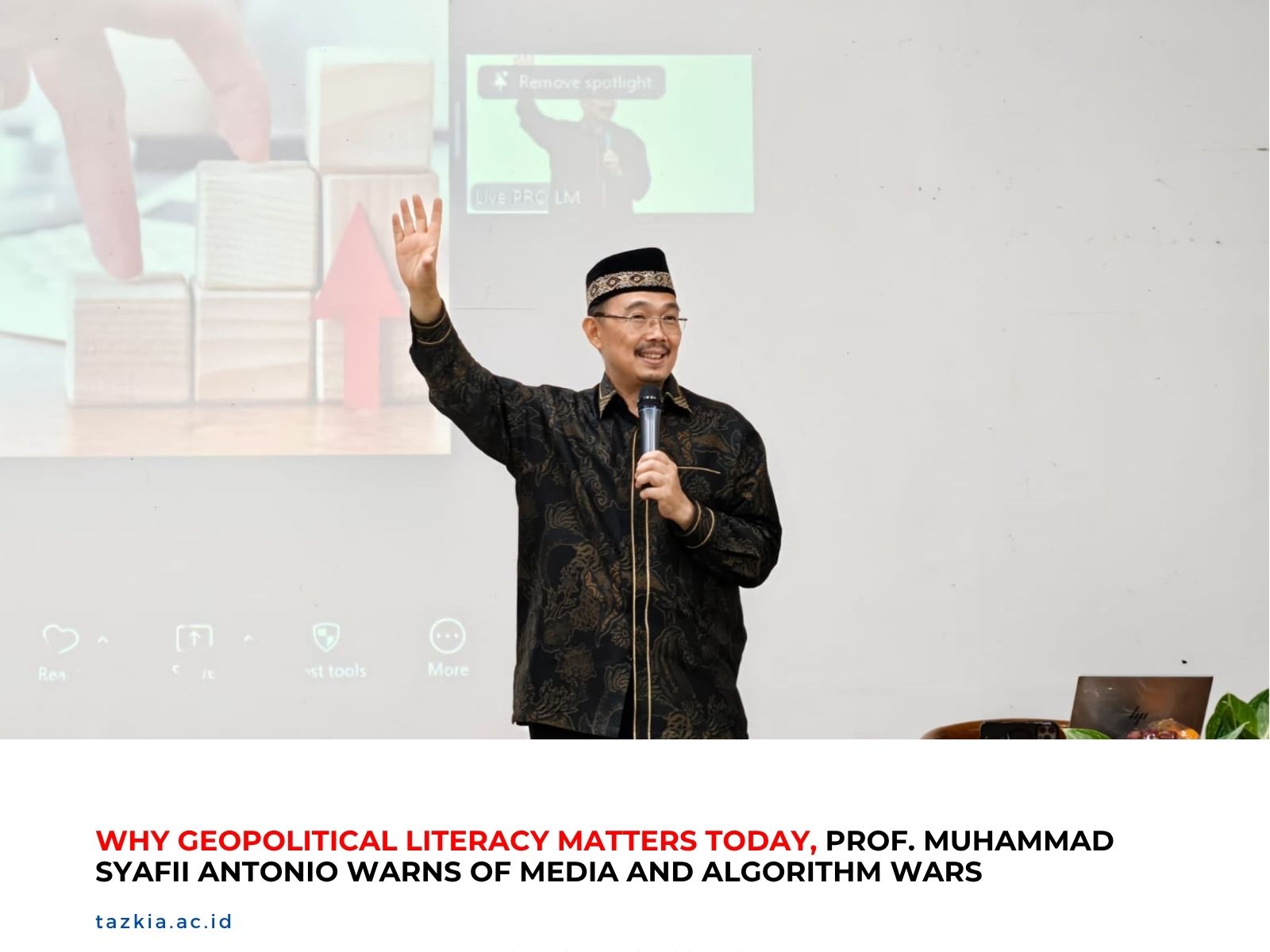
According to Antonio, the modern world is no longer experiencing only traditional conflicts but also “media wars, algorithm wars, and public opinion wars.” These forms of competition shape how information spreads and how societies interpret global events. In the age of digital platforms and social media, narratives can travel faster than verified facts. As a result, communities may easily be influenced by sensational headlines or viral content without understanding the broader geopolitical context. Antonio warned that this environment requires individuals to be more careful when consuming and sharing information, especially when it relates to sensitive international issues involving religion, politics, and economic interests.
To address this challenge, Antonio suggested that people should develop stronger analytical habits when following global news. One important step is accessing reliable international sources and examining information from multiple perspectives. By doing so, audiences can gain a more comprehensive understanding of world events instead of relying solely on fragmented narratives circulating on social media. He also encouraged audiences to read widely and pay attention to data-driven analysis, including reports that use statistics and verified information to explain global developments. This approach allows readers to move beyond emotional reactions and develop a deeper understanding of international dynamics.
Antonio outlined three key skills that are essential for strengthening geopolitical literacy. The first is critical thinking, which enables individuals to analyze information carefully rather than accepting it at face value. The second is fact-checking, a practice that involves verifying information through trusted sources and official data before sharing it with others. The third is strategic reading, meaning the ability to identify important information within large amounts of content and distinguish it from irrelevant or misleading details. Together, these skills can help people navigate the complex flow of information in the digital era.
In his remarks, Antonio also connected the importance of verification with Islamic teachings. He referred to a verse from the Qur’an that instructs believers to verify information before reacting or spreading it. This concept, known as tabayyun, encourages careful examination of news in order to prevent misunderstandings and avoid harming others due to incorrect information. In today’s fast-paced media environment, the principle of tabayyun remains highly relevant, especially when misinformation can easily spread through social media platforms and influence public opinion.
Strengthening geopolitical literacy is not only about understanding international politics but also about building responsible digital citizenship. When people develop the ability to evaluate information critically, they are less likely to be manipulated by propaganda, disinformation, or emotionally charged narratives. This skill becomes particularly important in societies where social media plays a central role in shaping public discussion and collective perception of global events. In many cases, viral misinformation can deepen divisions within communities and create unnecessary hostility between groups.
Ultimately, improving geopolitical literacy can contribute to a more informed and resilient society. By encouraging critical thinking, fact verification, and strategic reading, communities can better understand global developments and respond to them with wisdom rather than reactionary impulses. As global tensions continue to evolve, the ability to interpret information accurately will become one of the most important skills for navigating the modern world. The message delivered by Prof. Syafii Antonio serves as a reminder that knowledge, critical awareness, and responsible communication are essential foundations for building a more thoughtful and united global community.
